About me
Vinnytsia → Kyiv → Amsterdam → Cambridge
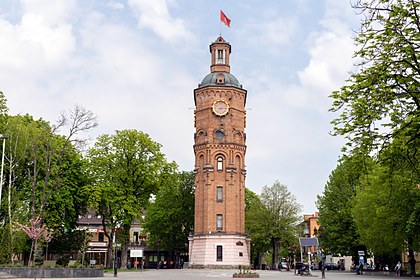
I grew up in Vinnytsia, Ukraine, where I attended a physics and mathematics lyceum and competed in regional physics and English olympiads. Physics appealed to me because it lets mathematics describe the world outside the page. The more I studied, the more I wanted to understand the principles underneath it all — which, as it turns out, is a good way to end up in theoretical physics.
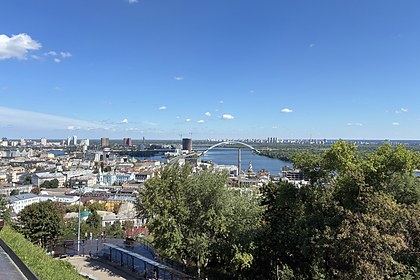
In 2020, I began studying physics and astronomy at Taras Shevchenko National University of Kyiv. Alongside a very mathematical curriculum, I joined the physics student association, helped organize the Young Scientists' Conference on Astronomy and Space Physics, and judged an experimental physics olympiad for high-school students. I also started research, working on a few smaller projects with both local and international professors.
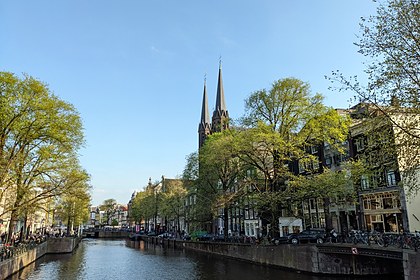
Russia's full-scale invasion of Ukraine changed the course of my studies. When in-person classes were suspended, I returned to Vinnytsia, continued studying online, and volunteered at a shelter for internally displaced people. In spring 2022, I was offered a short-term exchange at the University of Amsterdam and left for the Netherlands a week later. I eventually transferred to the joint physics and astronomy program of the University of Amsterdam and Vrije Universiteit Amsterdam, with support from the Amsterdam Ukrainian Refugee Physics & Astronomy Scholarship. To keep up with my peers I completed two years of the bachelor's program in one.
That summer, I joined Leiden Observatory for my first full research project, studying jellyfish galaxies. The work became part of a paper in The Astrophysical Journal.
For my bachelor's thesis, I moved from galaxies to something much smaller: I studied how a background of ultralight axions might exert a force on ions in a Paul trap, and whether trapped-ion sensing could detect it. My research interests have since wandered across several scales. I guess physics has a way of making very different questions feel like they belong in the same conversation.
For my master's, I chose the gravitation, astro-, and particle-physics track and found my way to quantum chromodynamics. I'm drawn to hard problems with potentially useful answers, and precision tests of the Standard Model offer both mathematical depth and a close connection to experiment. A summer at DESY in Hamburg in 2024 introduced me to precision calculations for the Drell–Yan process. I continued that work for my master's thesis at Nikhef with Wouter Waalewijn and Johannes Michel, calculating the Drell–Yan angular coefficients fully analytically at O(αs2). I graduated cum laude in 2025, and my thesis received the KHMW Young Talent Award in theoretical physics.
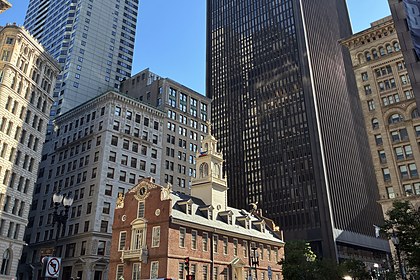
In autumn 2025, I moved to Cambridge, Massachusetts, to begin my Ph.D. at Harvard with Matthew Schwartz as my advisor and support from a Purcell Fellowship. Currently I work on forward-neutron production at electron–proton colliders in collaboration with Stella Schindler at Los Alamos National Laboratory. I spent the summer of 2026 there as a guest researcher. At Harvard, I also teach quantum field theory as a teaching fellow, mentor undergraduates through the POLARIS program, and take part in Gender Minorities and Women in Physics.
I hope to build a career in academia that combines research with teaching and mentorship. Two commitments shape that goal. One is Ukraine: I want to help Ukrainian students stay connected to the international physics community through visits to my former school, talks at Ukrainian universities, and mentoring. The other is supporting women in physics. I benefited a lot from having a woman mentor, and I'd like to offer younger researchers that kind of support too.
I also enjoy sharing physics beyond the university. That might mean a demonstration day for school students or a public lecture for lifelong learners. The questions are different, but the pleasure is much the same as it was when I started this academic journey: finding a way to make a difficult idea click.